

Sleep should mean rest.
For some people, every night is a struggle to breathe.
The faces most associated with sleep apnea
When the lower jaw, or both jaws, developed less, the tongue sits further back and the airway narrows, especially during sleep. These are the face types where it is seen most.
 Class II face
 Bimaxillary retrusive face
 Long face
To read at your own pace
Obstructive sleep apnea (OSA) happens when, during sleep, the upper airway narrows or closes for moments at a time. Breathing stops, the body reacts to restart it, and rest becomes fragmented, often without the person remembering it. That's why the person sleeping next to you usually notices it first: snoring, pauses, broken breathing. It's also common to wake up several times during the night, to be able to sleep only on your side or on your stomach because sleeping on your back becomes difficult, and to have reflux as well. During the day, tiredness, sleepiness or trouble concentrating can appear.
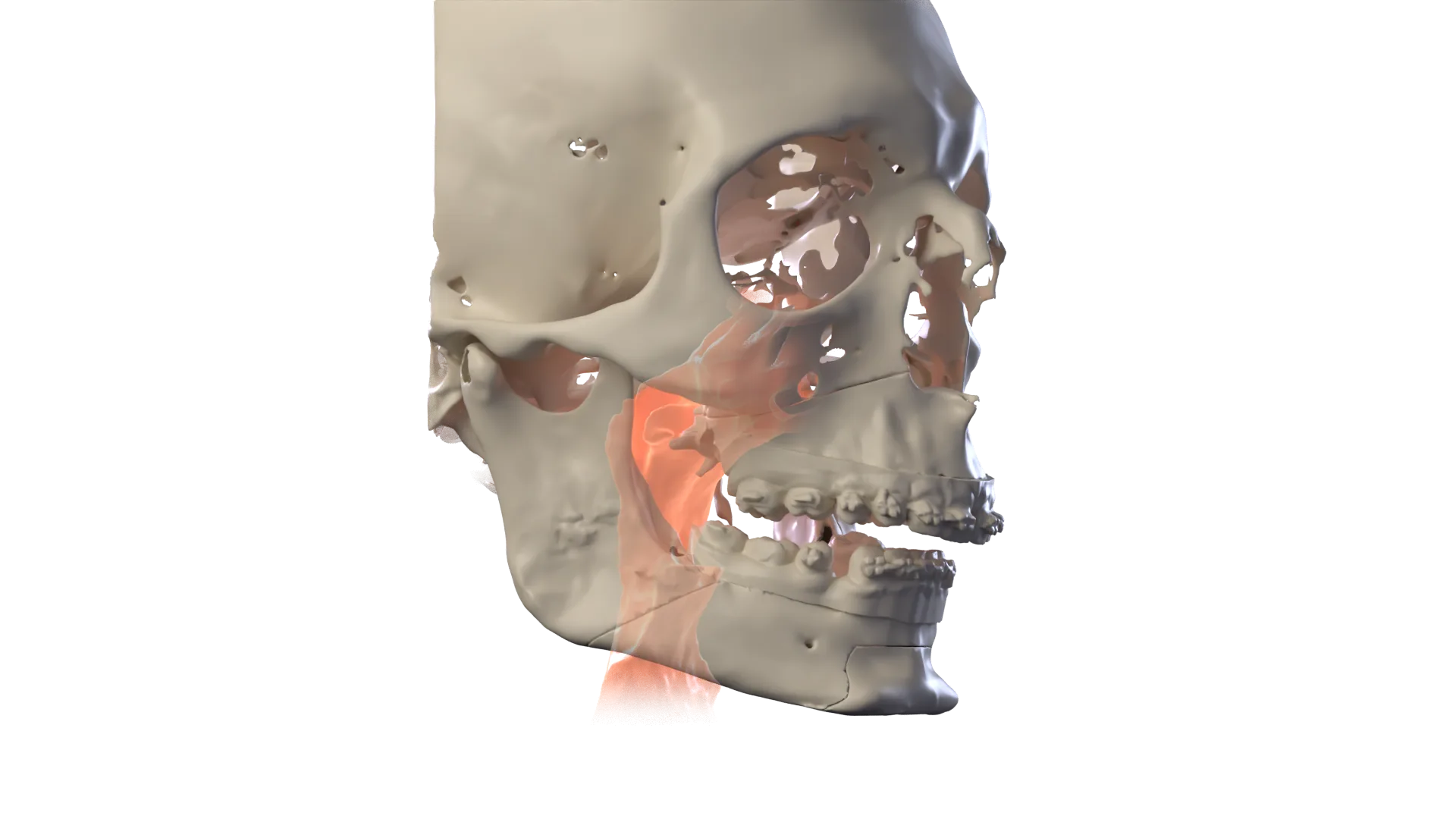
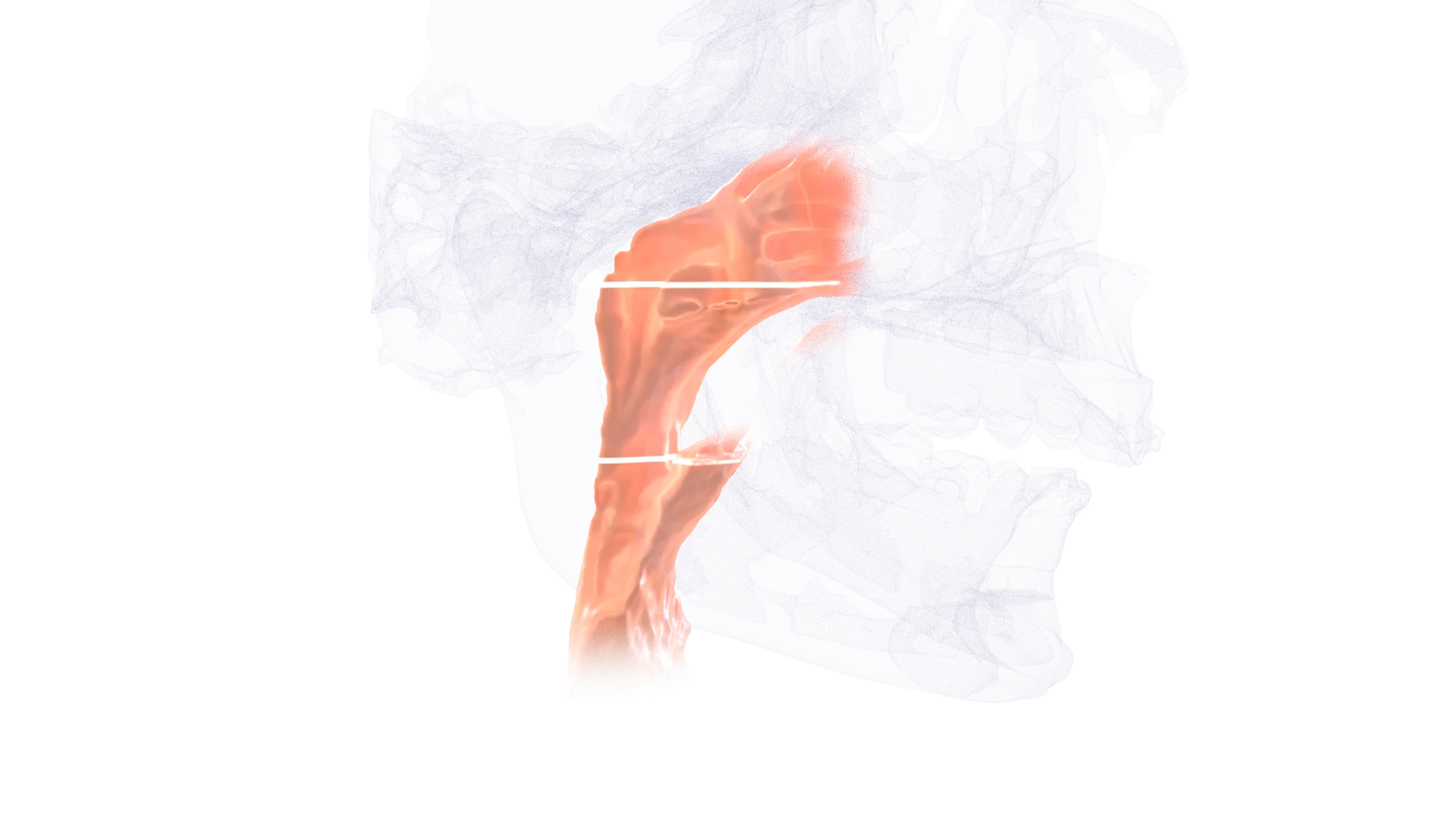
The upper airway isn't just the throat. It starts at the nose, in the nasal passages, and continues through the nasopharynx, behind the nose; then through the oropharynx, behind the palate and the tongue, and through the hypopharynx, down to the larynx. Its walls are largely made of muscle and soft tissue. The muscles of the palate and the tongue are anchored to the jaws and to the hyoid, a small bone in the neck, and they work as a unit: that's why the way the structure of the face grew has such an influence on the space available for air.
Sleep apnea always has several causes, but the structure of the face has a strong influence, making it more or less likely. When growth didn't leave enough functional space, the tongue and the muscles have less room, and so does the air. Orthognathic surgery restores the growth that was missing and, with it, that space: that's why it's so effective. When properly indicated, maxillomandibular advancement, which brings the upper jaw and lower jaw forward, often together with the chin, is the surgery with the greatest impact on obstructive sleep apnea. And because it changes the structure of the face, the change in the airway is permanent.
The diagnosis is made with a sleep study (polysomnography), which records how you breathe while you sleep, and other tests. On the maxillofacial surgery side, we add what we see in your face and in the CT scan, reconstructed into a virtual model: how the jaws grew, where the tongue sits and how much space there is for air. The airway is complex and can have different problems; when the case requires it, we work as a team with other specialties. There are also other treatments, such as CPAP, a machine used every night, and all the options are discussed at the consultation.
The images show how the space for air changed in one case; they are not a prediction. Every person is different, and what you can expect in your case is discussed at the consultation.
The first step is a conversation.
Frequently asked questions
Does snoring mean I have sleep apnea?
Not necessarily. Snoring is common and doesn't always come with pauses in breathing. When there are also pauses that someone notices, frequent waking, tiredness when you get up or sleepiness during the day, it's worth getting checked. What confirms or rules out sleep apnea is a sleep study (polysomnography).
How is sleep apnea diagnosed?
With a sleep study (polysomnography), which records your breathing and other measurements while you sleep, and other tests depending on the case. Maxillofacial surgery adds a study of your face, with a clinical exam and a CT scan: how the jaws grew, where the tongue sits and how much space there is for air. With all that information, we determine whether surgery is an option for you.
Can maxillofacial surgery help with sleep apnea?
Yes, when it's properly indicated. Orthognathic surgery works on the structure of the face, which has a strong influence on sleep apnea, making it more or less likely, and maxillomandibular advancement is the surgery with the greatest impact on obstructive sleep apnea. Whether it's an option for you is determined with your sleep study, the study of your face and a conversation about your symptoms and what you're looking for.
Does surgery cure sleep apnea?
Sleep apnea always has several causes, so the result isn't promised: it's measured. What surgery does is act on a factor that carries a lot of weight, the structure of the face, and permanently restore the space that was missing during growth; that's why, when properly indicated, it's so effective. How much your case improves is checked during follow-up.
What is maxillomandibular advancement?
It's a type of orthognathic surgery in which the upper jaw and lower jaw, often together with the chin, are brought forward. It's planned on a digital twin of your face and is usually combined with orthodontics, because the teeth are the key that makes everything fit together and stay in place. As the jaws move forward, the tongue and the muscles anchored to them move forward too, and the airway gains space.
Do I have to stop using my CPAP?
Not on your own: keep using it as prescribed while we study your case. Using it doesn't stop us from evaluating your face and seeing how much its structure influences your sleep apnea. If surgery is indicated, how you breathe during sleep is checked afterwards and, based on those results, we decide whether you still need it. ---
Do you know someone who should read this?
Share it on WhatsApp or Instagram. It's information to help understand, not a diagnosis.