Long face: when the face grew too much downward
When the face grows too much downward, the lips, the smile and breathing all feel it.
What a long face is like
In a long face, the face grew more downward than its harmony needed; this is called vertical excess. It shows mostly in the lower third, from the nose to the chin, which looks elongated and often narrower. It can come with a Class II face, a Class III face or on its own. An open bite is often added: when you close your mouth, the teeth touch only at the back, at the molars, and a gap remains at the front.
There's usually more behind it than it seems: growth patterns, a tongue that sits between the teeth and, sometimes, habits or a nose that gets blocked and forces mouth breathing while growing. Everything influences everything else.
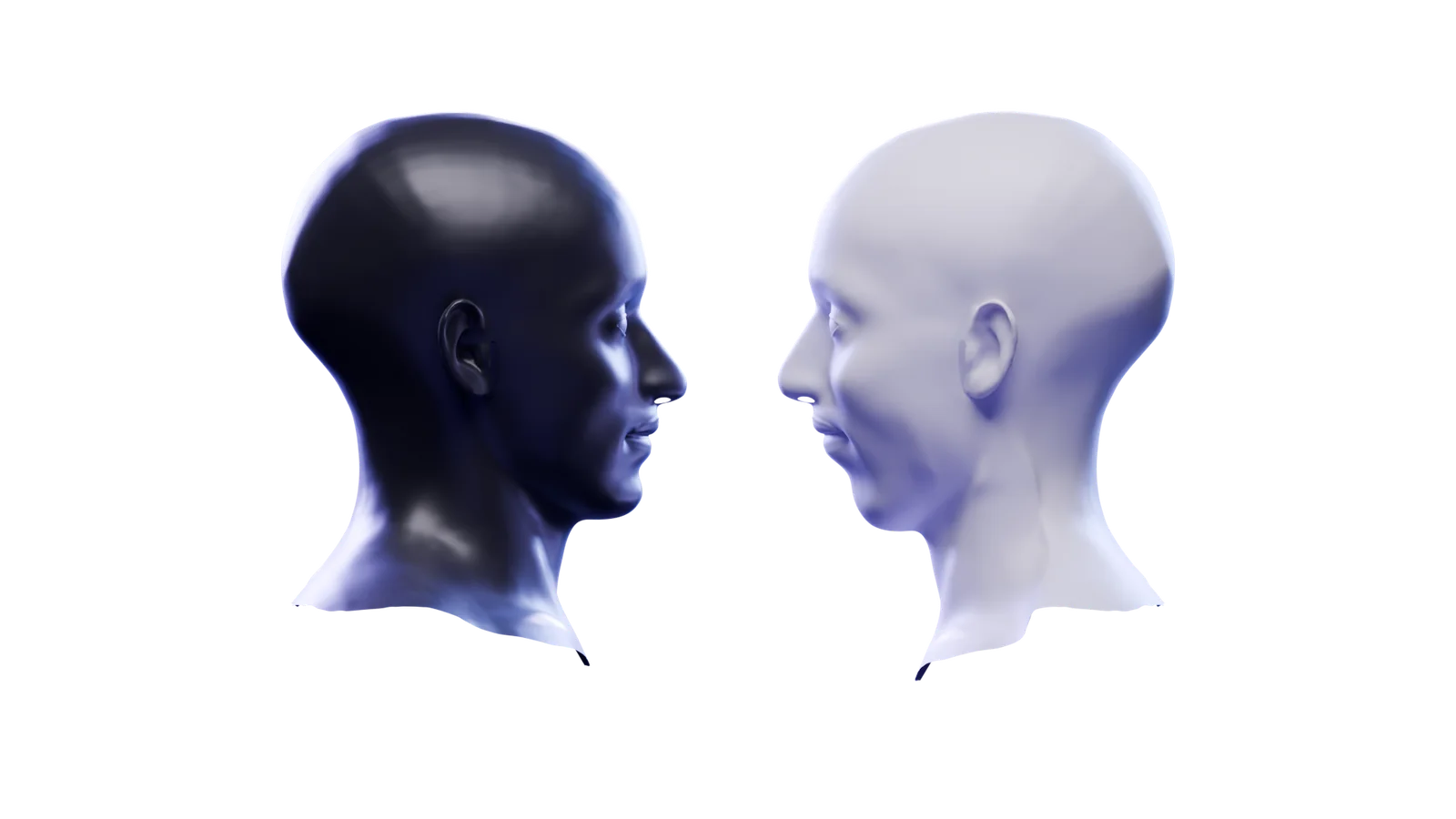
What you notice and what you feel
Aesthetic: an elongated face, lips that stay apart at rest and are hard to close without effort, a chin that tenses when bringing them together and a smile that shows more gum. The chin often looks set back, because the lower jaw rotates downward.
Functional: the nose blocks easily and breathing ends up through the mouth, during sleep too, with snoring or sleep that isn't restful. If the front teeth don't touch, biting into food with them is hard, and some sounds aren't as clear.
Oral: the load falls on the molars, the only teeth that touch, and they wear more. Mouth breathing dries the gums, which get inflamed more easily. Muscle and joint pain and tiredness can also appear (TMD).
Postural: the tongue rests low and forward, between the teeth. The head tends to tilt back or move forward to breathe better, and the lips and chin overwork to keep the mouth closed.

How it's treated
There's no single formula. Each case is decided individually, based on what your diagnosis shows, what you prefer and what the team sees for your situation. Most often, the foundation is orthodontics and surgery working together: your teeth, and how they fit, are the key that makes everything come together and stay in place, and surgery brings the structure into an optimal, harmonious position. In a long face, moving only the teeth has a narrower reach and the front gap tends to open again; often the upper jaw is moved to a higher position and the lower jaw follows that movement. If the tongue is involved, speech therapy adds its work. Depending on the case, other specialties or facial procedures are added. Everything is planned beforehand on a digital twin of your face; the full path is in The process.
If your front teeth don't touch, or it's hard to close your lips or breathe through your nose, it's worth understanding why. We look at it in an evaluation.
Frequently asked questions
Why don't my front teeth touch?
Even if your molars do touch at the back, the bite may not close at the front because of how the face grew, the position of the tongue, habits, mouth breathing, or a combination of all of these. That's why the first step is a comprehensive diagnosis, with 3D imaging, that shows the cause. With that, we define the best path for you.
Can the bite be closed with orthodontics alone?
It depends on what's causing it. When it's mainly due to the position of the teeth or to habits, orthodontics may be enough. When how the face grew is involved, moving only the teeth has a more limited reach and the bite tends to open again. We go over it with you, with the advantages and limits of each option.
Does the tongue play a role?
Often, yes. The tongue can rest between the teeth that don't close, either as a cause or as an adaptation. That's why, when it's involved, the plan adds speech therapy, so the new bite comes with a function that helps keep it in place.
Can it cause other problems, like pain or trouble breathing?
Yes, sometimes. You may have muscle pain or tiredness when chewing, and also a nose that gets blocked and leads to mouth breathing, during the day or while you sleep. They're part of the same picture, which is why the evaluation also looks at your muscles and your breathing.
Will surgery make my face shorter?
The goal is proportion. By moving the upper jaw to a higher position, the lower face regains harmony, the lips close with less effort and the smile shows less gum. You're still you: your face, in balance.
Will I speak differently after surgery?
Your voice doesn't change. What can change, for the better, is how you articulate some sounds once your front teeth meet again. If needed, speech therapy supports that adjustment during recovery.
Do you know someone who should read this?
Share it on WhatsApp or Instagram. It's information to help understand, not a diagnosis.