
Your surgery begins long before the operating room.
It begins with a comprehensive diagnosis, a good plan and a team committed to you.
To read at your own pace
Planning surgery virtually is an important part of the journey, but it isn't everything. What matters most is a comprehensive diagnosis, with complete 3D studies for each case, a good treatment plan and a team committed to you. All surgery carries risks, and that's why it matters that all of us, the team and you, pull together toward the same goal. The human, the technological and the clinical come together to serve your case.
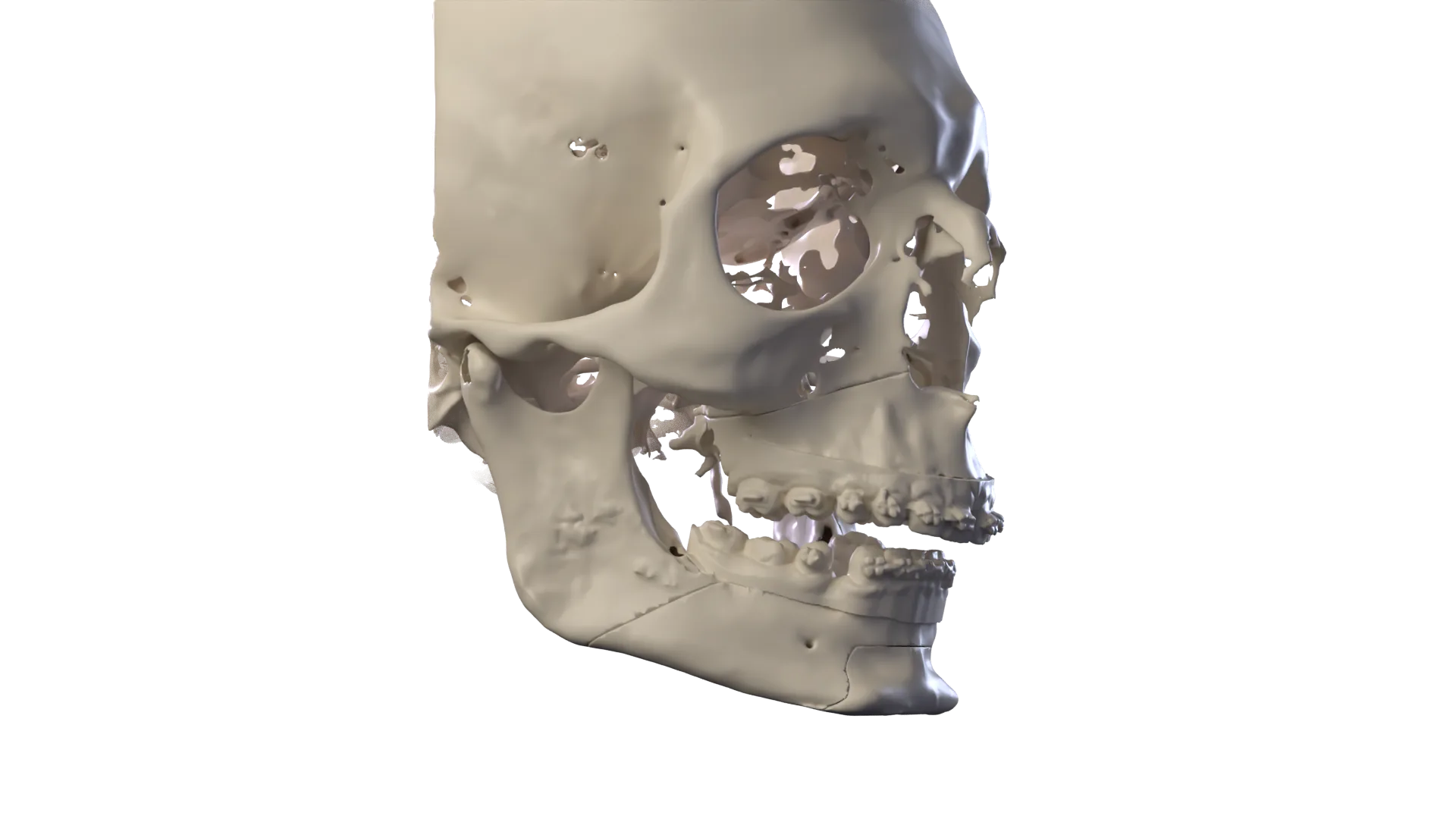
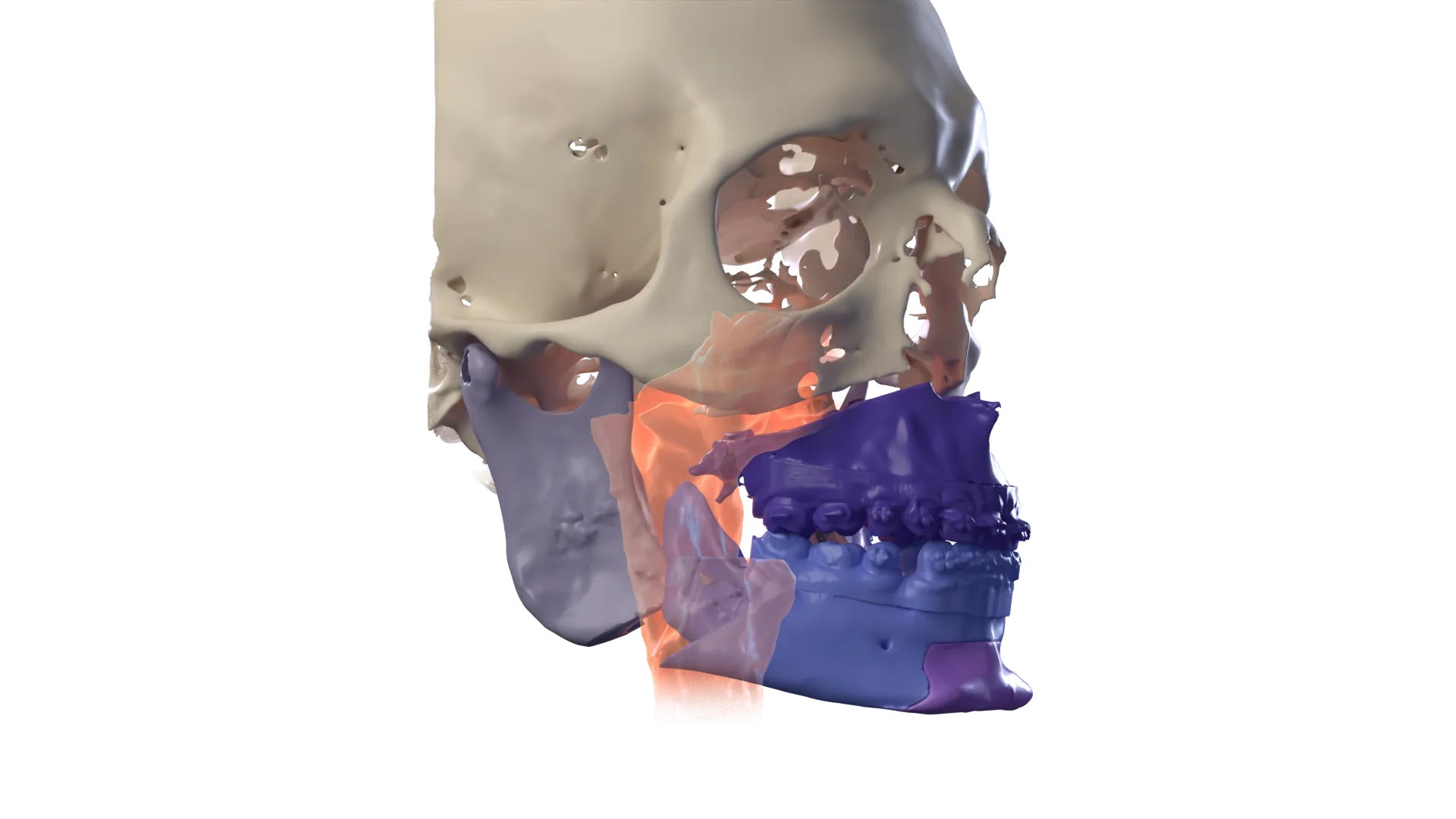
It all starts with listening to you and examining you: what bothers you, what worries you, your history and how you see yourself. Then come the studies. 3D scans, such as CBCT, go beyond a flat X-ray: they show bones, joints and airway from every angle, in their real position, and make it possible to measure volumes. The intraoral scan records your teeth and your bite with a small camera, with no impression paste, in just a few minutes. With both records, a virtual reconstruction is built in which teeth and bone come together in a single model: your digital twin. Photographs and other studies are added when the case needs them.
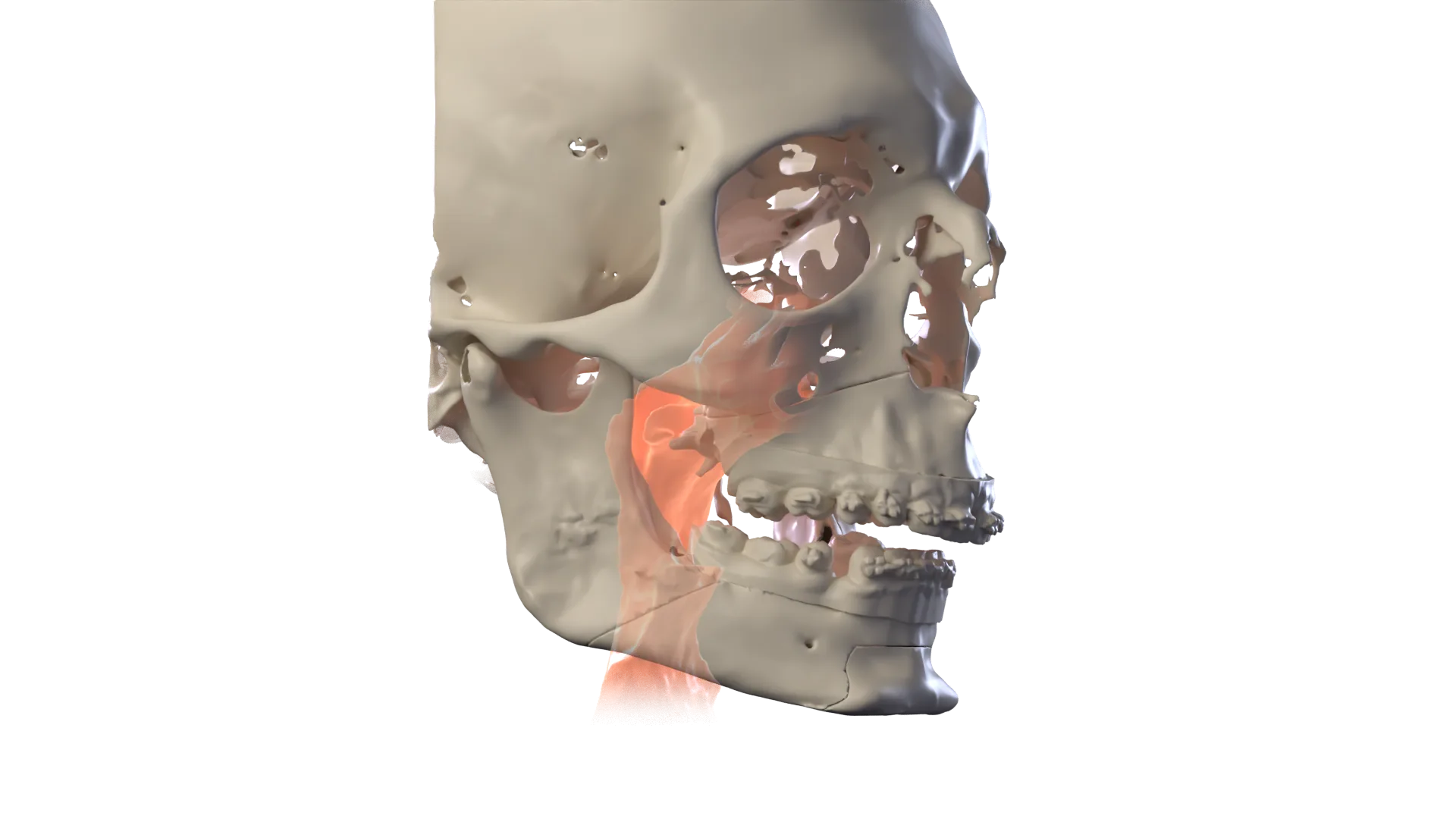
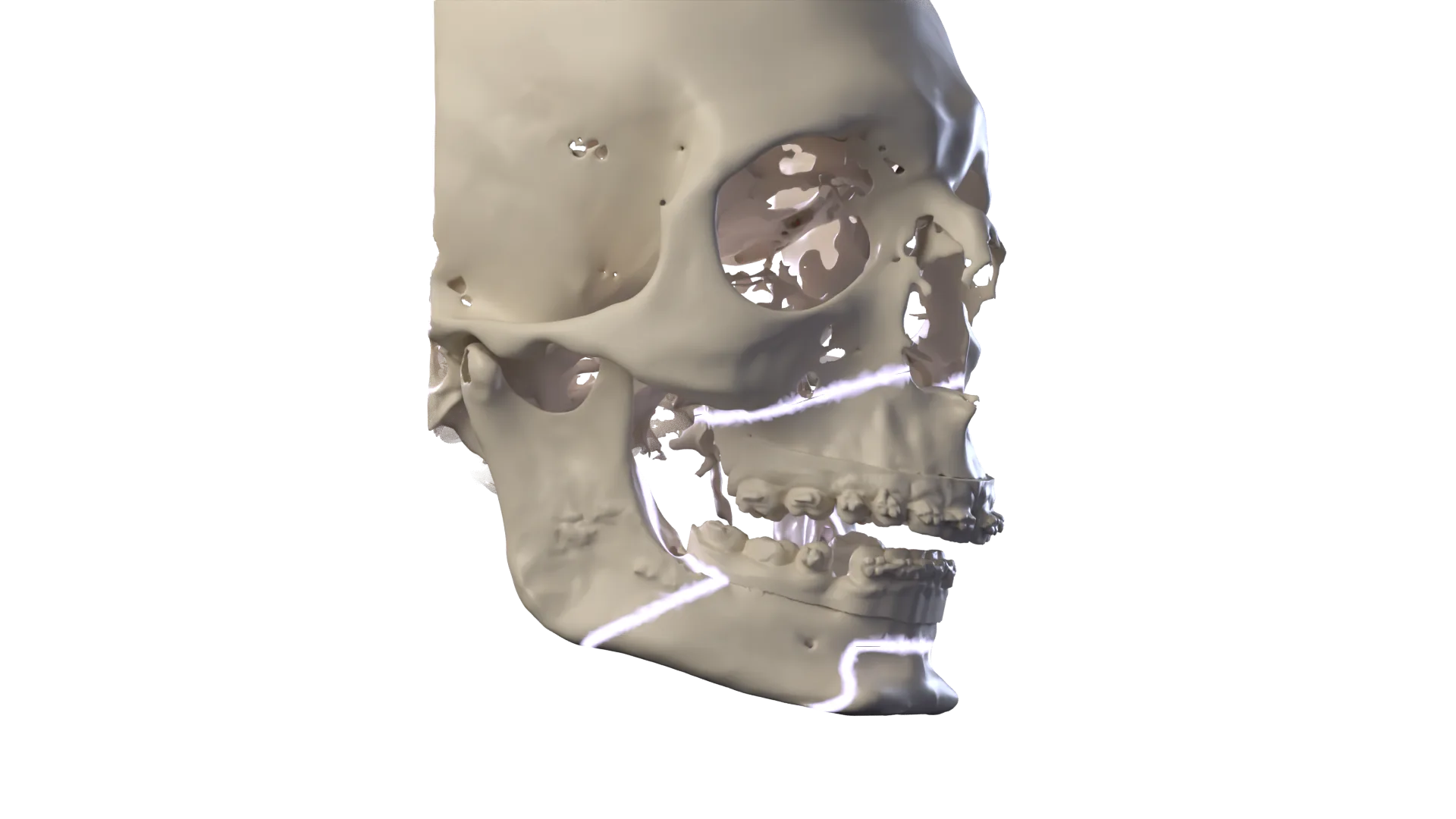
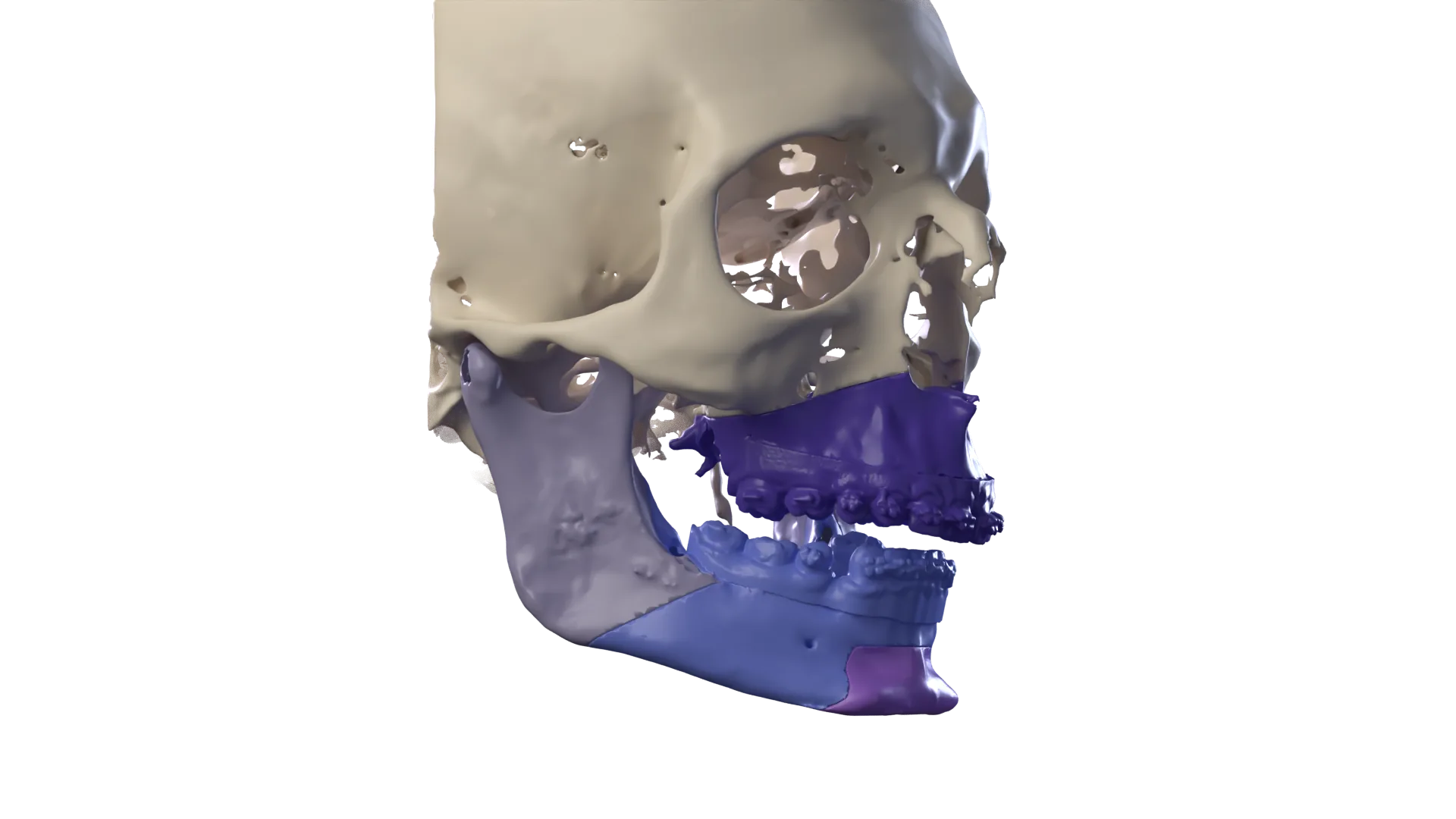
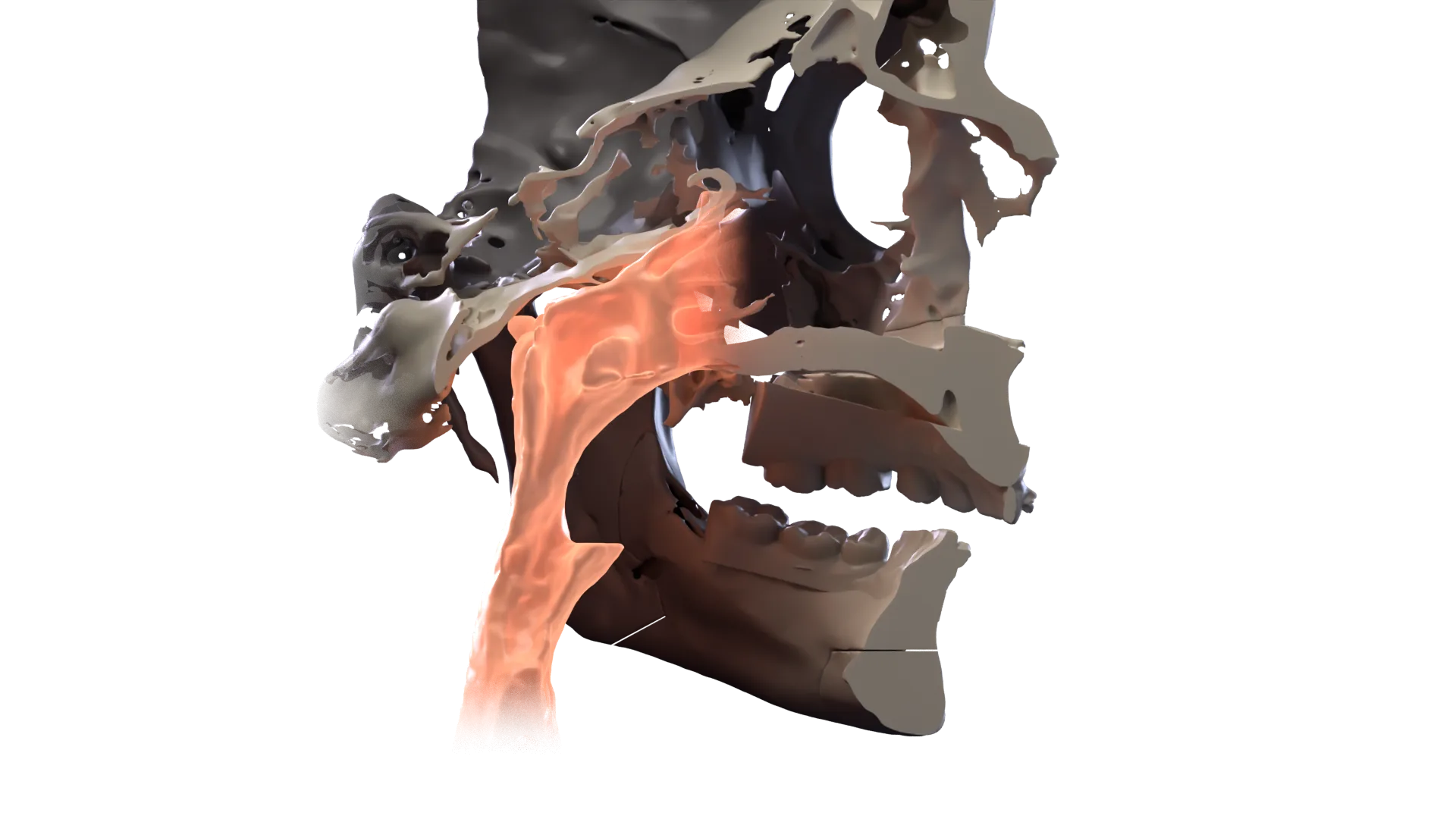
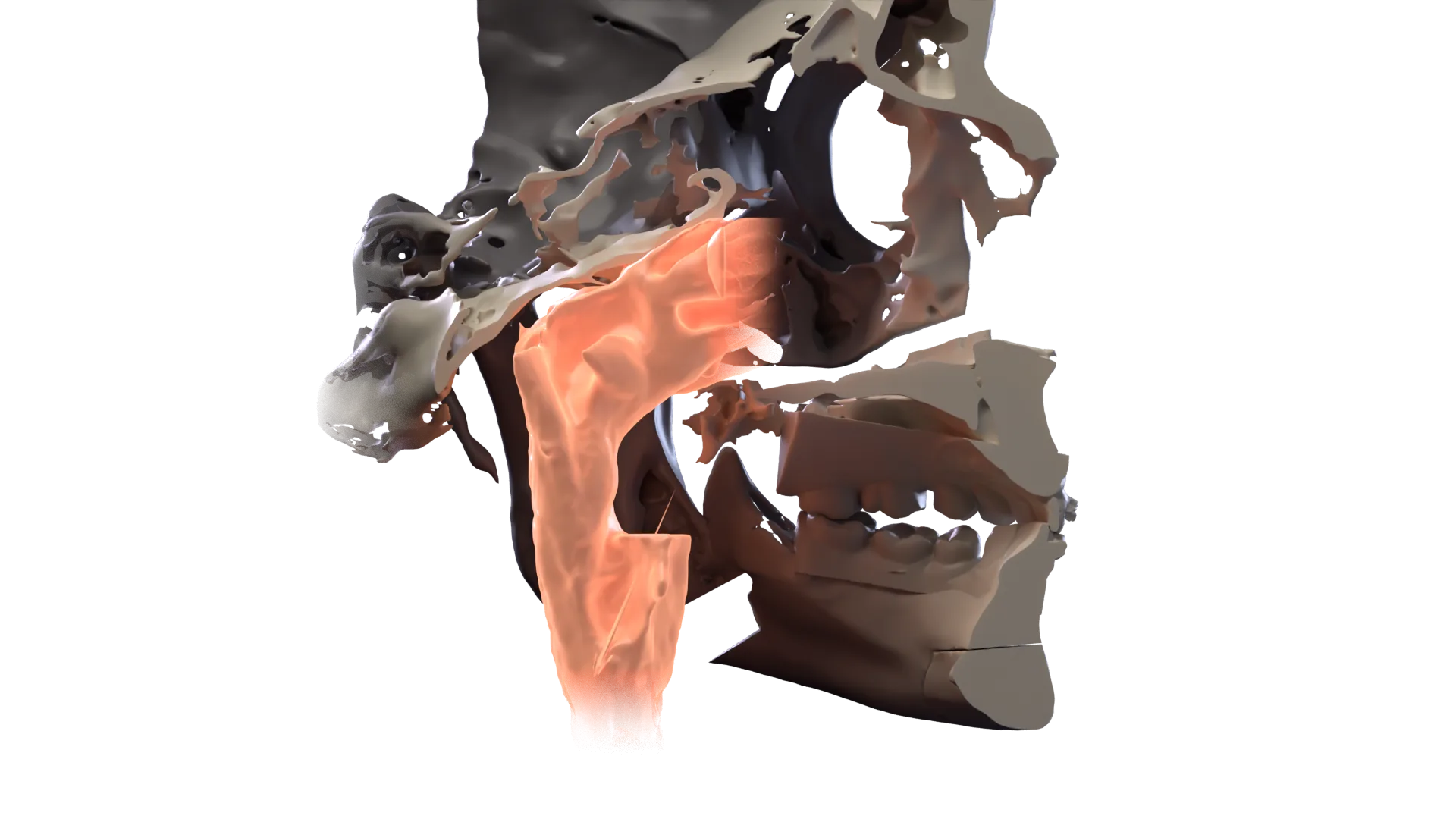
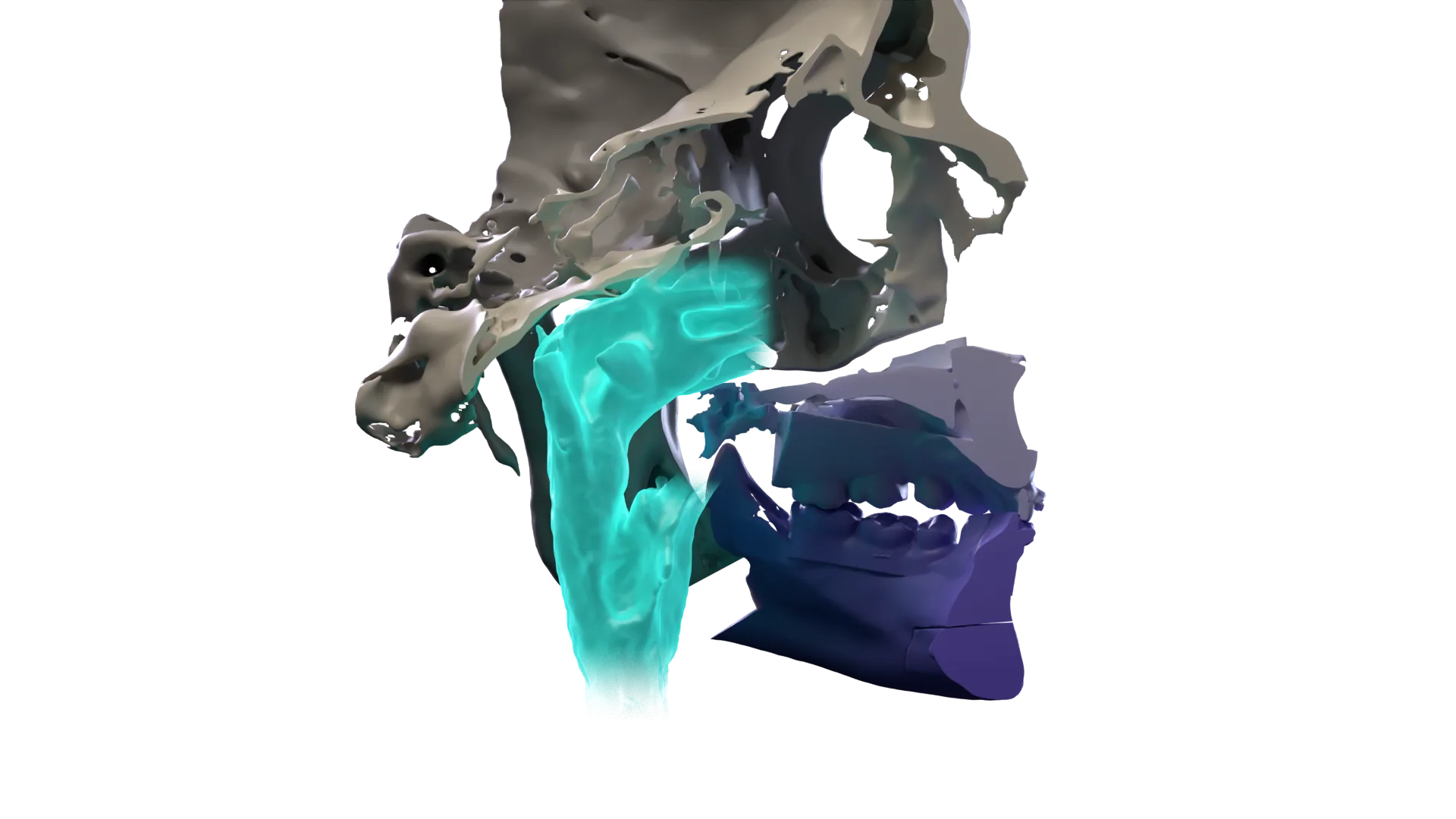
On that twin, every movement of the upper jaw (maxilla), the lower jaw (mandible) and the chin is planned virtually. Everything happens in a single operation, and the order of each step is defined according to the case. The details, the benefits and the limits of each option are reviewed, and the decision is made as a team: orthodontics, which plans your face from the position of the teeth, and surgery, which moves the structure. The plan looks at your bite, your smile, your breathing and the harmony of your face, all at the same time.
In the operating room, every step has its tool. From the plan, guides are designed and 3D-printed, personalized for each case, and they help reproduce what was planned with precision. Ultrasonic (piezoelectric) instruments make it possible to work in areas just millimeters wide and to protect sensitive structures, such as nerves, and they are complemented by precision saws and specific measurements. Techniques are selected case by case.
On the day of your surgery, your questions have already been answered and the plan is ready: fewer surprises, more precision and more peace of mind. Afterward, the journey continues: follow-up and check-ups with a team that knows your case, and homework, because your part counts too. Today we can do things that used to be impossible; everything else we'll go over at your consultation.
The first step is a conversation.
Frequently asked questions
What is CBCT, or a 3D scan?
It's an imaging test that records your face in three dimensions and goes beyond a flat X-ray: it lets us see bones, joints and airway from every angle and measure volumes. It's what we use to build your digital twin. It isn't ordered "just in case"; it's ordered when the case needs it, such as when planning orthognathic surgery.
Is the intraoral scan uncomfortable?
No. It's done with a small camera passed over your teeth for a few minutes, with no impression paste. Your mouth appears in 3D on the screen instantly, and that record is joined to the 3D scan to plan with precision.
Can I see my plan before surgery?
Yes. The plan is reviewed with you before surgery, so you understand which movements will be made and why. It's part of answering your questions beforehand, calmly, and not on the day of surgery.
Is planning the surgery the same as the full treatment?
No. Virtual planning defines how the surgery will be done, and it's one part of the journey. The full treatment includes the comprehensive diagnosis, orthodontics, surgery, recovery and follow-up visits, with a team by your side at every stage. The human, the technological and the clinical come together to serve your case.
Does virtual planning guarantee the result?
No tool guarantees a result, and all surgery carries risks. Virtual planning makes it possible to decide each movement with complete information and take it to the operating room with guides made just for you: there are fewer surprises and more precision. What matters most is the whole picture: a good diagnosis, a good plan and a team that pulls with you toward the same goal, with follow-up visits during recovery.
Is one jaw operated on first and then the other?
They aren't separate surgeries: everything happens in a single operation. Within that same surgery, the team follows a planned sequence to move the upper jaw, the lower jaw and the chin, and which one goes first is defined when each case is planned. It's a technical detail; what matters is that everything is decided beforehand, calmly.
What is a 3D-printed surgical guide?
It's a piece designed from your plan and made with 3D printing, personalized for you. In the operating room it rests on the bone and helps reproduce the planned cuts and positions. Each guide works only for your case and your surgery.
What is the piezoelectric instrument?
It's an ultrasonic instrument that cuts bone through micro-vibrations. It allows precise work in areas just millimeters wide and protects sensitive structures, such as nerves. It's one of the tools used in the operating room, along with others such as precision saws, and its use is defined for each case and each stage of the surgery. ---
Do you know someone who should read this?
Share it on WhatsApp or Instagram. It's information to help understand, not a diagnosis.