


Your face is a single story.
How you bite, how you breathe, how you look and how you feel all come from the same structure.
To read at your own pace
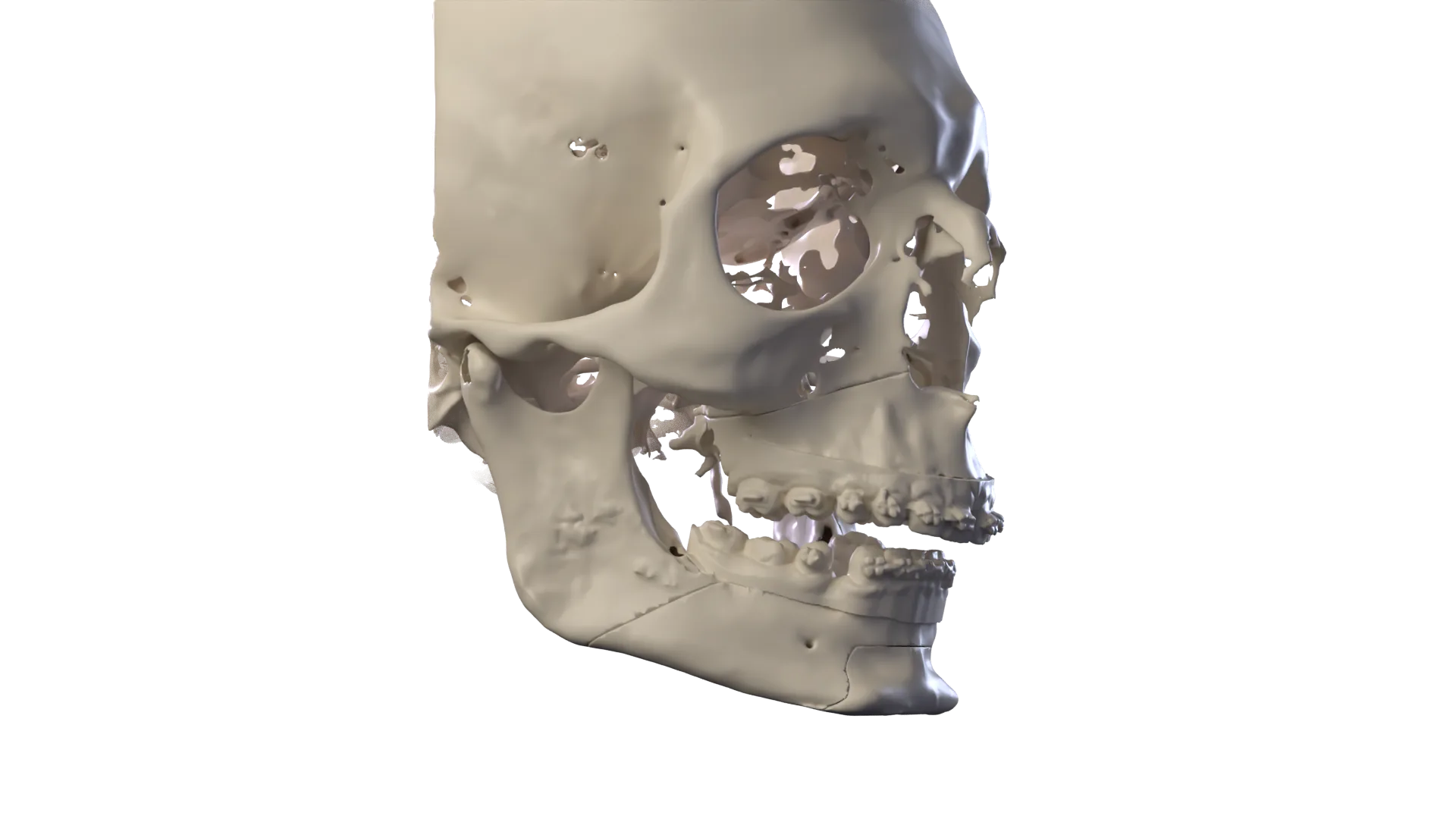
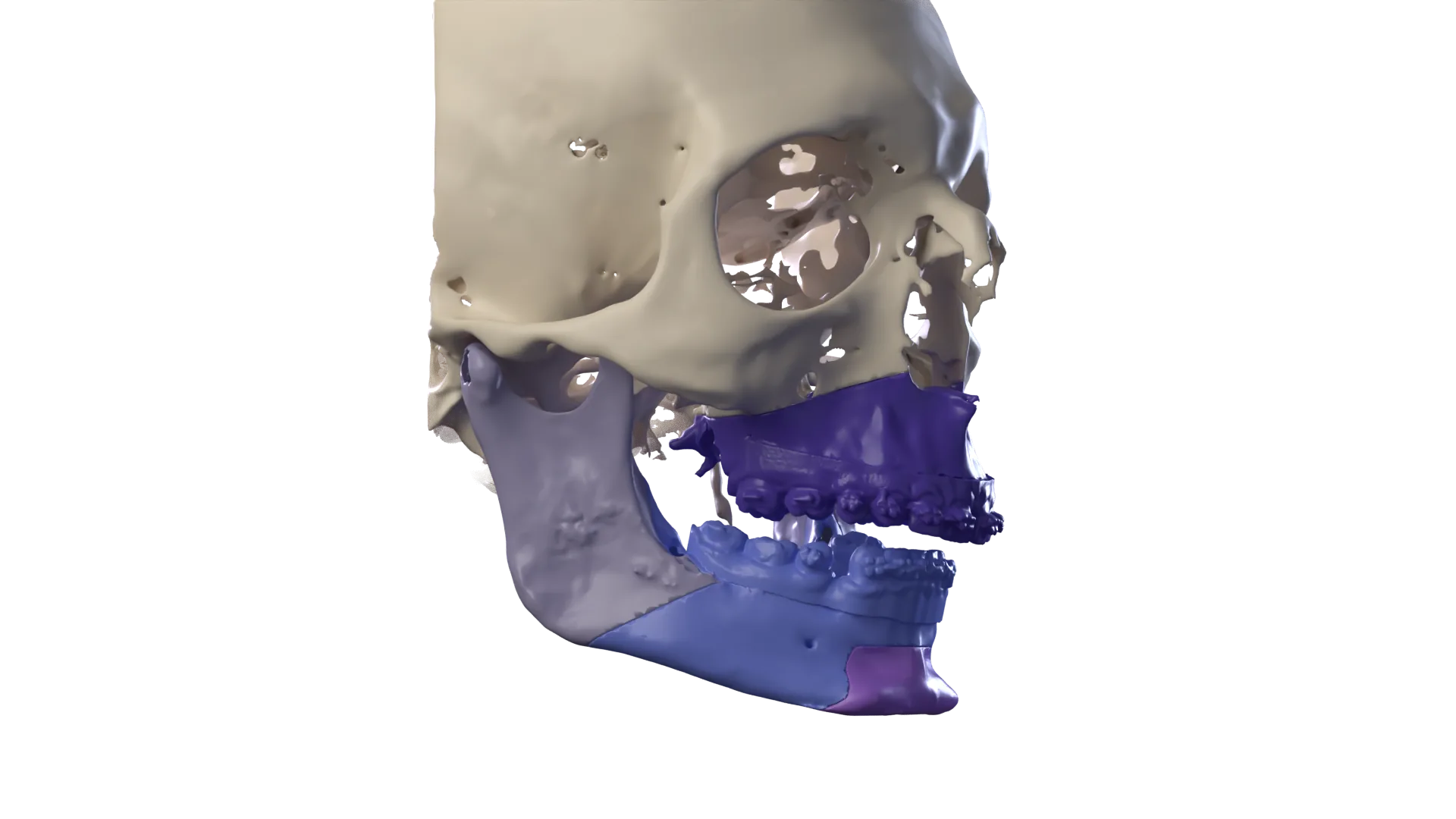
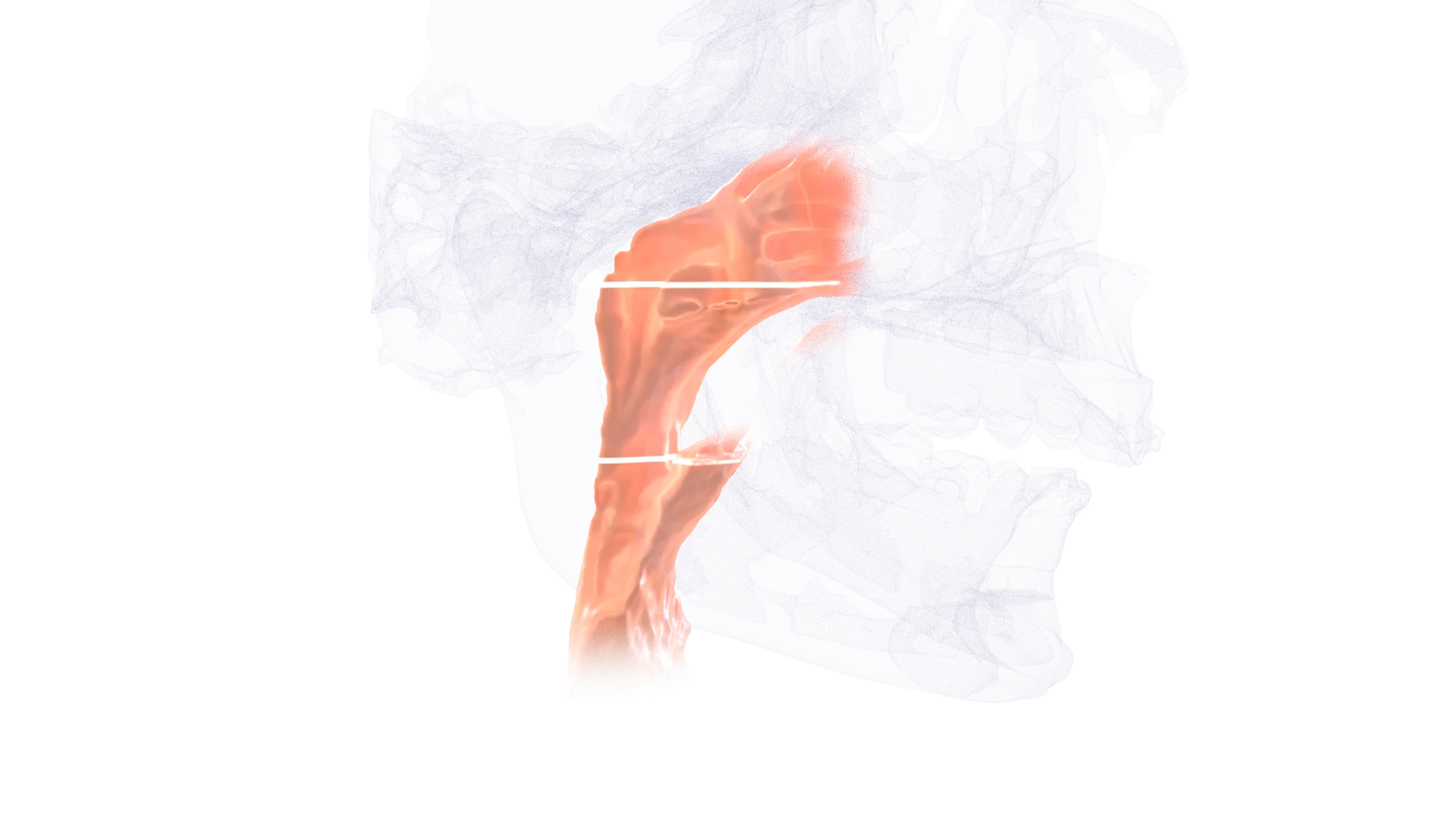
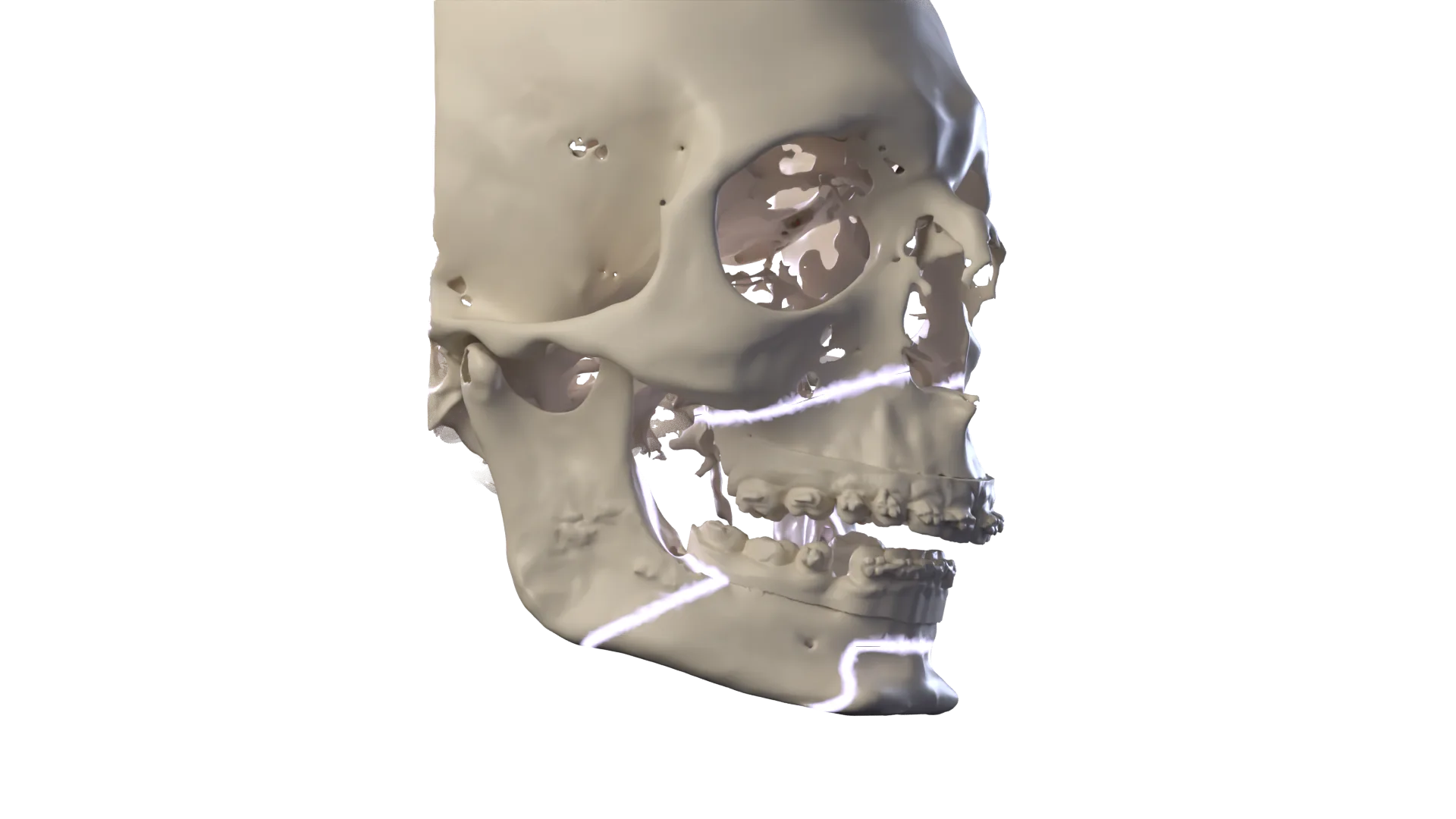
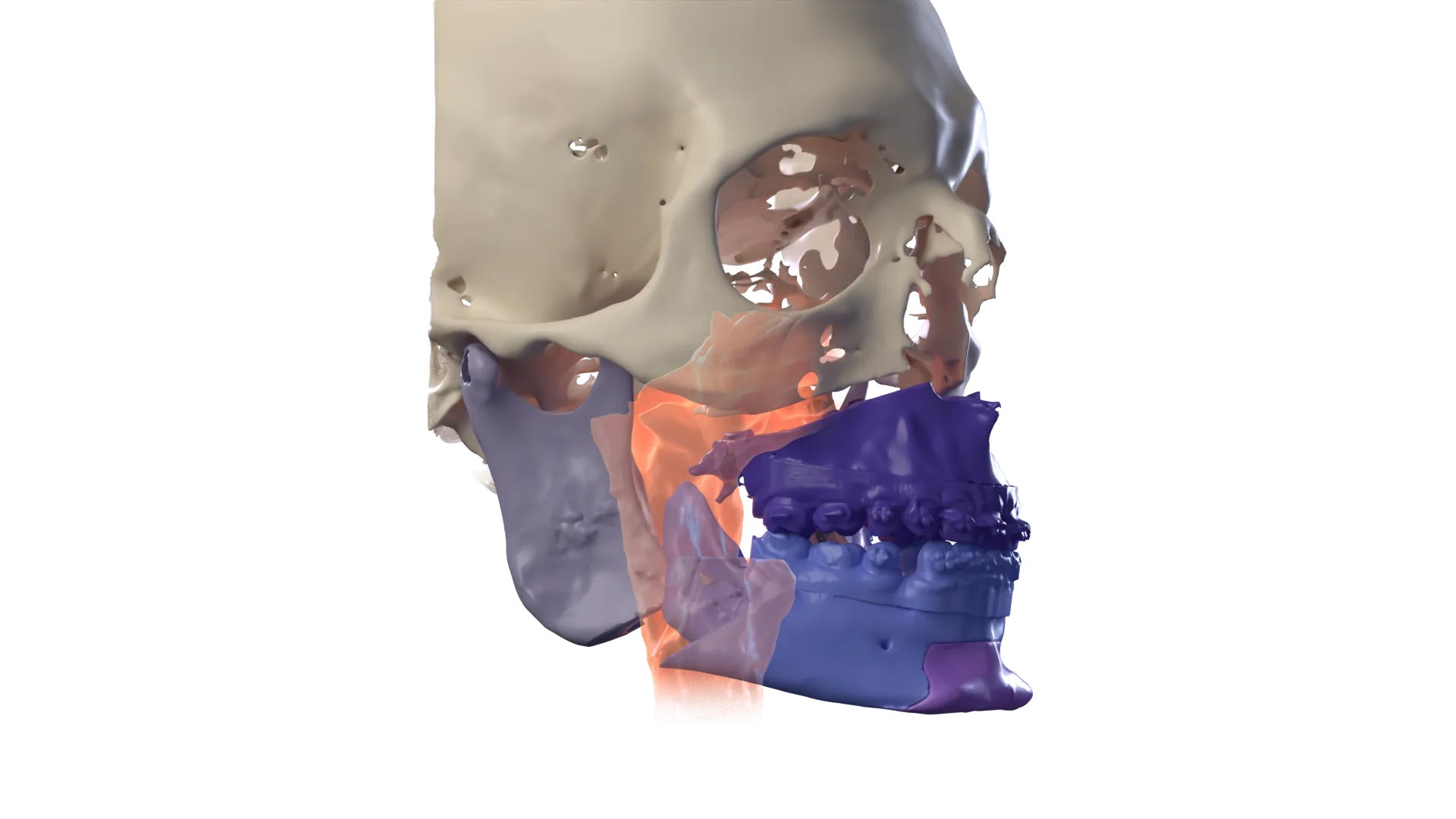
Orthognathic surgery (jaw surgery) repositions the structures of the face in harmony: the upper jaw (maxilla), the lower jaw (mandible) and, when needed, the chin, and with them the nose, lips, muscles, tongue and breathing space settle into place. Many people search for it as maxillofacial surgery, which is the specialty that performs it. It's considered when the growth and development of the face didn't keep in step, and that shows up all at once in the bite, breathing, smile, rest and profile.
It's for those things that bother you or don't quite fit: a bite that doesn't fit together or makes chewing tiring, snoring or sleep that doesn't leave you rested, a chin that seems to fade away or a tilted smile. You learn to live with them, but they take away your peace of mind or confidence. They're often part of the same story, because bone, muscles, teeth and joints grow and work together. That's why we study the whole face, with 3D scans, a clinical exam and a conversation about what you feel and what you're looking for.
The teeth and the bite are the key that makes the pieces fit together and stay in place, and for that we rely on orthodontics: it plans your face from the position of the teeth, and surgery repositions the structure. In the traditional approach, orthodontics prepares beforehand and fine-tunes afterwards; the preparation takes 12 to 24 months on average, and the full treatment generally about 6 more months. These are reference times: some cases are faster and others take longer. In some cases it's possible to operate first and sort out the bite afterwards.
The surgery is done under general anesthesia and planned in advance, virtually, on a digital twin of your face. That way, on the day of surgery the plan is already set and your questions were answered beforehand.
Surgery is done once the growth of the face and skull has stabilized, and it's always assessed case by case. There are surgical and non-surgical options, each with different goals, and all of them are discussed with you. Today we can do things that used to be impossible; the rest we'll go over in your consultation.
The first step is a conversation.
Frequently asked questions
What is orthognathic surgery for?
For those things that bother you or don't quite fit and that, even if you learn to live with them, take away your peace of mind or confidence: a bite that doesn't fit together or tires you out, snoring or sleep that doesn't leave you rested, a profile or smile that doesn't feel in harmony to you. By repositioning the structures of the face, surgery works on all of that at once: how you bite, how you breathe, how you look and how you feel.
Is orthognathic surgery aesthetic surgery?
It isn't cosmetic surgery. It repositions the structures of your face in harmony, and that's why it changes how you bite, how you breathe, how you look and how you feel, all at once. Function and beauty go together: you can't work on one without the other.
Are orthognathic surgery and maxillofacial surgery the same thing?
They're often used interchangeably, but they aren't exactly the same. Maxillofacial surgery is the specialty; orthognathic surgery is one of its surgeries, the one that repositions, in harmony, the jaws and the facial structures that rest on them.
Will my face change?
Your face gains harmony, but you're still you. The movements are planned in advance on a virtual twin of your face, with your proportions and your function in mind, and they're reviewed with you before surgery. The goal is a natural result that feels like your own.
Will my voice change?
No. Your voice doesn't change with orthognathic surgery. What can improve, if there was difficulty before, is how you pronounce some sounds, because the teeth and lips end up in a better relationship with each other.
Does orthognathic surgery hurt?
It's done under general anesthesia, so you don't feel anything during surgery. Afterwards, there is more discomfort and swelling than pain during the first few weeks; it's managed with medication, physiotherapy and clear instructions, and it eases gradually.
From what age can you have surgery?
Surgery is done once the growth of the face and skull has stabilized, and that's assessed case by case, not by a fixed age. There's no set upper age limit either: what matters is the diagnosis, your general health and that the preparation is complete.
Do you always need braces?
In general, orthodontics is part of the plan, because the teeth and the bite are the key that makes the pieces fit together and stay in place: it prepares the bite beforehand and fine-tunes it afterwards. Whether braces or aligners are used is decided case by case with your orthodontist. In some cases it's possible to operate first and do the orthodontics afterwards (surgery first). ---
Do you know someone who should read this?
Share it on WhatsApp or Instagram. It's information to help understand, not a diagnosis.