

How you bite, breathe, look and feel: a single story.
A guide to understanding, in simple words, a field where medicine and dentistry meet. Explore it at your own pace.
This page is a guide for patients and also for professionals. Orthognathic surgery and, more broadly, maxillofacial surgery bridge medicine and dentistry, and outside the specialty they often seem like mysterious territory. Here I try to explain complex concepts in simple terms, without losing precision.
Questions are welcome, and so are contributions. If something isn't clear, if you'd like to go deeper, or if you're a professional and want to add your perspective, write to me directly and let's talk.
Stefan Domančić · Maxillofacial surgeon
Write to me on WhatsAppFour chapters, at your own pace
Understand
What it is and whether it's for you
Your case
Every face has its own story
Treatment
How it's done, step by step
After
Recovery and what comes next
To read at your own pace
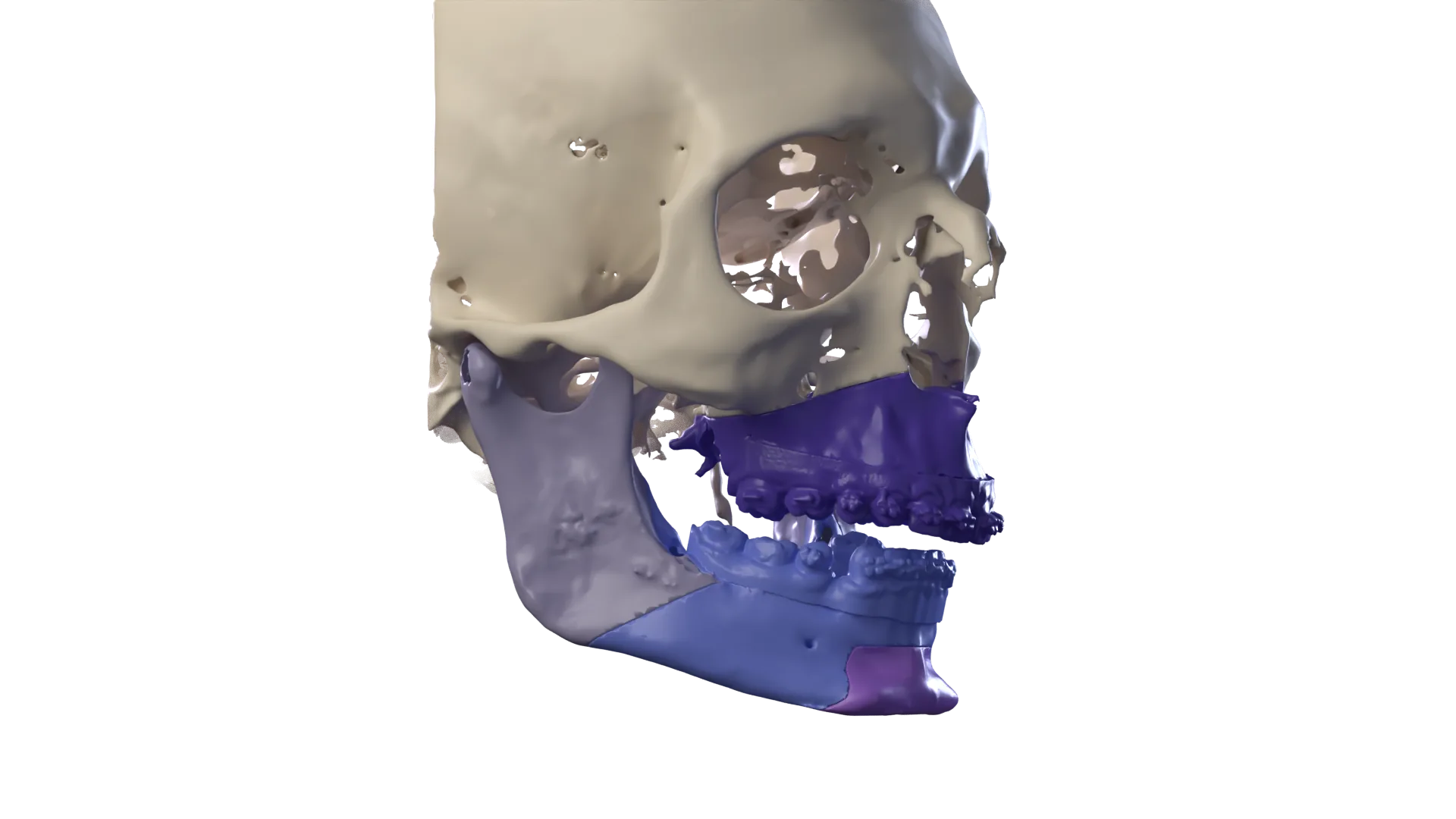
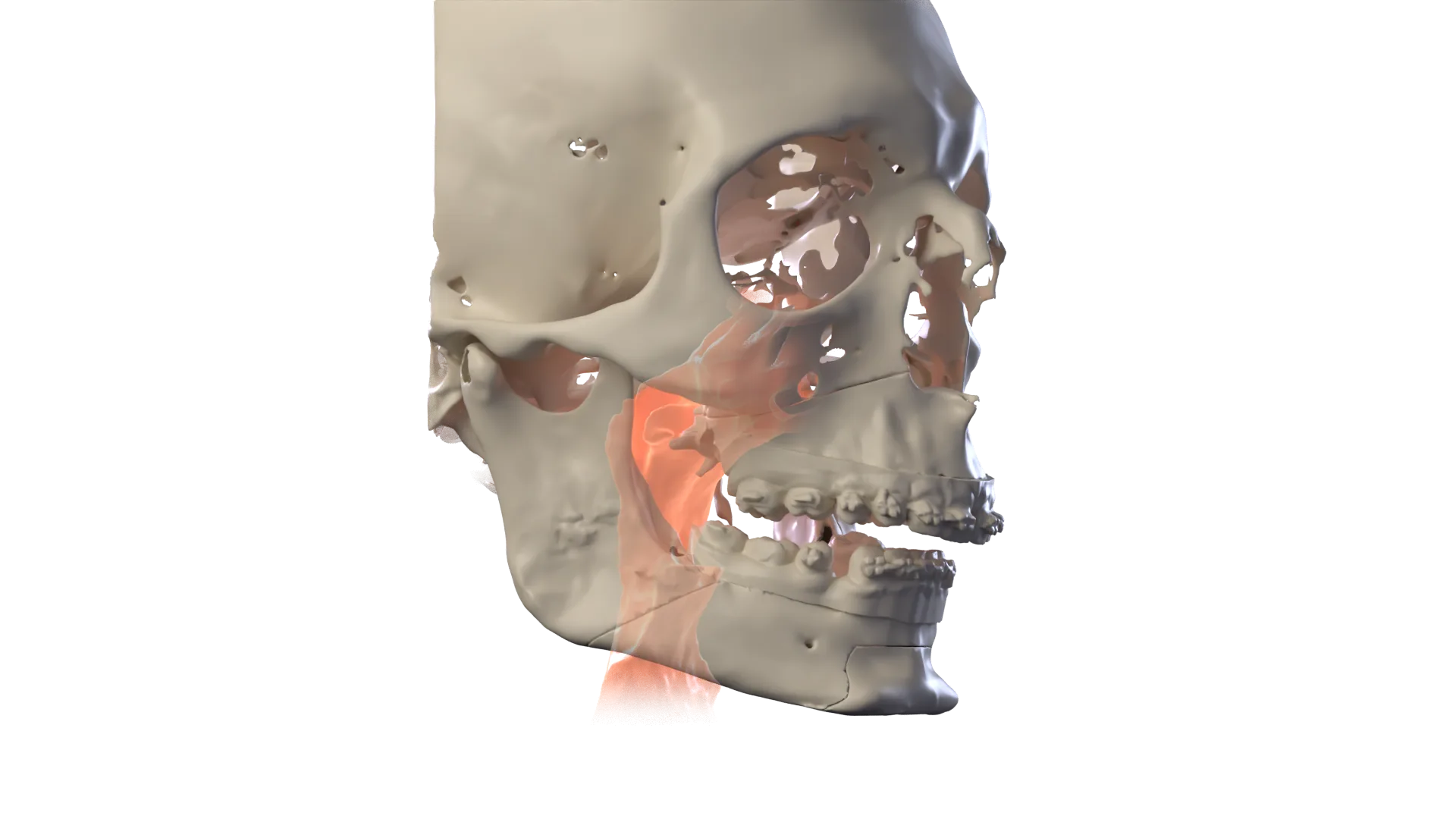
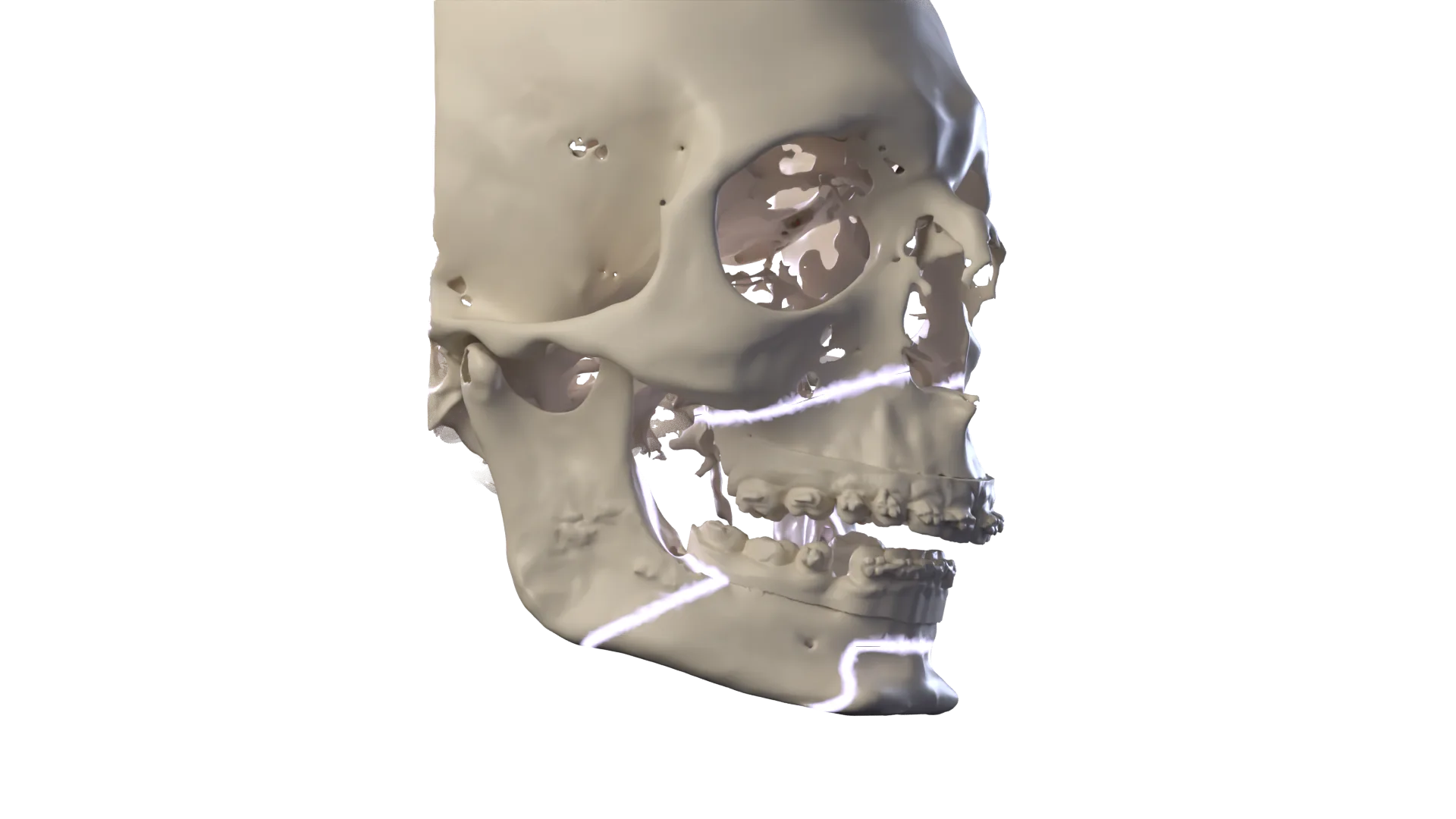
Orthognathic surgery (jaw surgery) brings the structures of the face —the upper jaw (maxilla), the lower jaw (mandible) and, when needed, the chin— into an optimal, harmonious position. It isn't about teeth on one side and the face on the other: how you bite, how you breathe, how you look and how you feel all come from the same structure, and they are treated together.
This guide is meant to be read calmly, and it's organized into four chapters. In Understand you'll see what the surgery is, what a maxillofacial surgeon does, which signs are worth paying attention to and how it has evolved. In Your case you'll find the most common situations, one by one: when the lower jaw lacked development or grew too much, when the front teeth don't touch, when the face looks different on one side, or when it's hard to rest well. In Treatment, how diagnosis, orthodontics and surgery come together in a single plan, and how each movement is planned on a digital twin of your face before surgery. In After, recovery, nutrition and what's worth knowing to make an informed decision.
Every case is different, and nothing you read here replaces an evaluation. In it, we study your whole face, request the tests your case needs, and talk through all the options, surgical and non-surgical, with their pros and cons. Today we can do things that used to be impossible; the rest we'll go over in your consultation.
This guide is written by Stefan Domančić, a maxillofacial surgeon trained at the Universidad de Chile, dedicated to treating differences in how the face grows and develops (dentofacial deformities). He is accredited at several private clinics and sees self-paying patients as well as patients covered by Isapre (private health insurance in Chile) and Fonasa (Chile's public health insurance).
Start by understanding. The rest of the path falls into place.
Do you know someone who should read this?
Share it on WhatsApp or Instagram. It's information to help understand, not a diagnosis.
Frequently asked questions
What is orthognathic surgery?
It's the surgery that brings the structures of the face —the upper jaw, the lower jaw and, when needed, the chin— into a harmonious position, so they work and look balanced. The teeth and the bite are the key that makes everything fit together and stay in place. That's why it almost always goes hand in hand with orthodontics, and it's planned beforehand on a digital twin of your face.
What does a maxillofacial surgeon do?
This is the specialist in surgery of the mouth, the jaws and the face: from oral surgery and implants to facial trauma, the jaw joint and orthognathic surgery. In this guide we mostly talk about differences in how the face grows and develops.
How do I know if orthognathic surgery is for me?
There are signs that can guide you: a bite that doesn't fit together, snoring or sleep that doesn't leave you rested, a small or very large lower jaw, a tilted smile, discomfort in the jaw joint. None of them is a diagnosis on its own. If you relate to two or more, an evaluation is worth it.
Where is the evaluation?
The evaluation takes place at Dental Concept Studio, Av. Providencia 1939, Providencia, Monday to Saturday. You book it by WhatsApp, directly with Dr. Domančić. He sees self-paying patients as well as patients covered by Isapre and Fonasa, and there are payment options.
How long does the whole process take?
It depends on each case. In the traditional approach, with orthodontics before and after surgery, the orthodontic preparation takes 12 to 24 months on average, and the complete process generally takes about 6 more months. These are reference times: some cases are faster and others take longer. In some cases it's possible to operate first and sort out the bite afterwards (surgery first).
What happens at the first evaluation?
We listen to you and examine your whole face: how you bite, how you smile, its symmetry and how you breathe. If needed, we request the tests your case requires. Then we study the results and present the options to you, with their pros and cons, so you can make an informed decision. ---